



Real estate remains one of the most attractive ways to build long-term wealth in Nigeria. For many investors, the big question is not whether to invest, but where to invest for the best returns. That is why real estate ROI Nigeria is such a popular search term among buyers and investors looking for steady growth and strong capital appreciation.
One location that keeps coming up in these conversations is Ibeju Lekki. With major infrastructure projects, commercial developments, and rising demand for land, the area has become a hotspot for investors seeking strong Ibeju Lekki property returns. If you are considering property investment in Lagos, this guide explains what makes the area attractive and how to think about property investment profits realistically.
Why ROI Matters in Nigerian Real Estate
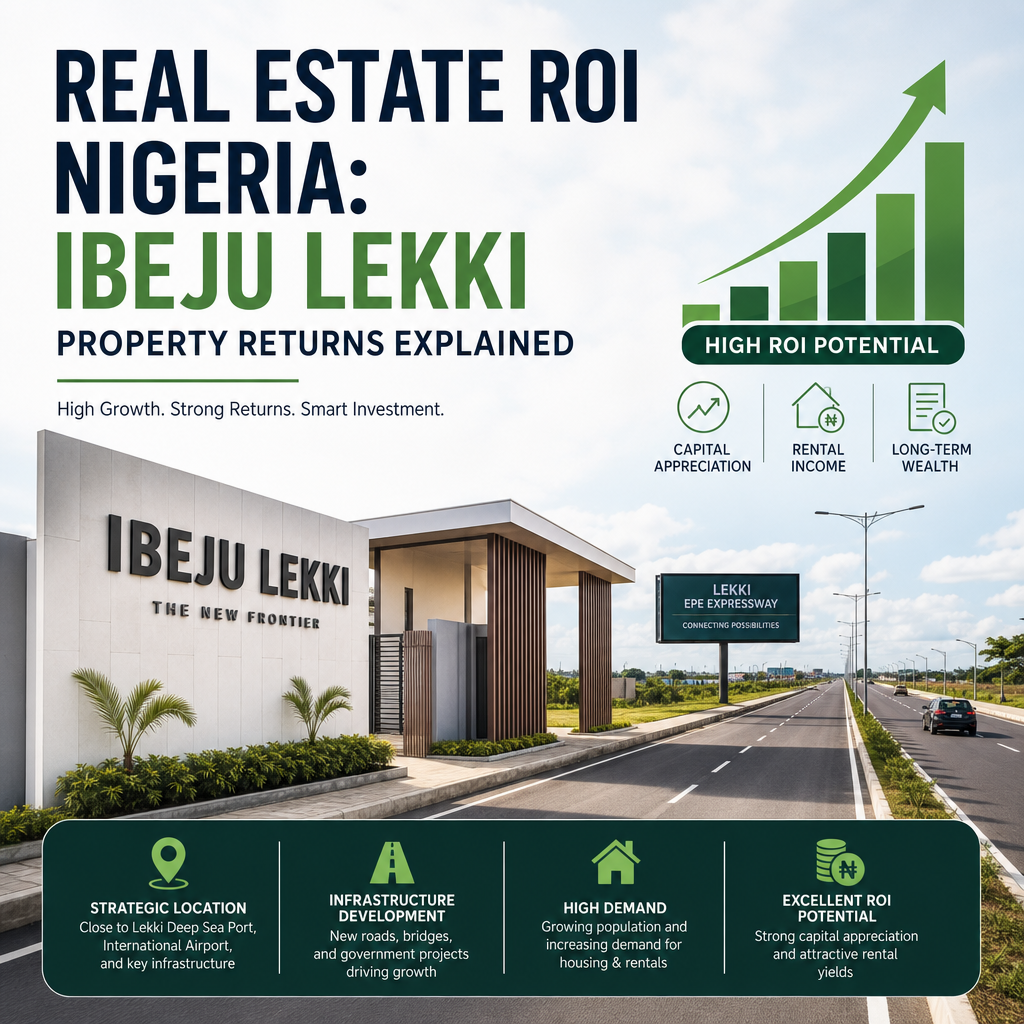
ROI, or return on investment, measures how much profit you make compared to what you spent. In real estate, this can come from:
– Capital appreciation: when land or property increases in value over time
– Rental income: regular earnings from tenants
– Resale profit: selling the property at a higher price later
In Nigeria, real estate ROI can be influenced by factors such as location, infrastructure, title documents, market demand, and the pace of development around the property. A well-chosen property can deliver strong gains, but timing and location matter a lot. For a broader view of the services and property options available, you can also explore what we do.
Why Ibeju Lekki Stands Out
Ibeju Lekki has become one of the most discussed property corridors in Lagos. The reason is simple: the area is tied to some of the state’s biggest development projects and future growth plans.
Key Growth Drivers
Several factors are boosting interest in the area:
– Lekki Deep Sea Port
– Dangote Refinery
– Lekki Free Trade Zone
– Ongoing road and infrastructure expansion
– Rising residential and commercial demand
These projects are not just headlines. They create jobs, attract businesses, and increase the need for housing, land, logistics facilities, and commercial spaces. As development continues, property values often rise, creating opportunities for early investors. You can read more about one of the most common entry points on our lands page.
Understanding Ibeju Lekki Property Returns
When people talk about Ibeju Lekki property returns, they are usually referring to how much a plot or property can appreciate over time. In many cases, the strongest returns come from buying land early before major developments fully mature.
For example, a plot bought at a lower price in a developing part of Ibeju Lekki may appreciate significantly as roads improve, nearby projects open, and more people move into the area. While exact figures vary, investors often look at the long-term potential rather than immediate cash flow.
What Impacts Returns in Ibeju Lekki?
Several elements determine whether your investment performs well:
1. Proximity to major projects
Properties closer to key infrastructure often appreciate faster.
2. Land title and documentation
A verified title increases market confidence and future resale value.
3. Accessibility
Roads, drainage, and transport links can greatly affect attractiveness.
4. Developer reputation
If buying from a real estate company, trust and transparency matter.
5. Market timing
Entering early often leads to better profit margins.
Types of Property Investment Profits to Expect
Investors in Ibeju Lekki usually focus on land banking, but there are different ways to earn from property. Each has its own profit profile.
1. Land Appreciation
This is the most common strategy in the area. Buyers purchase land in a developing location and hold it while value rises over time. The profit comes when the land is sold later at a much higher price.
2. Rental Income
As residential and industrial activity increase, demand for rental properties may grow. Apartments, mini-flats, and worker housing can generate monthly income.
3. Commercial Development
Some investors buy land for future retail, office, or warehouse use. As business activity expands, commercial property can yield stronger long-term returns.
4. Lease or Resale to Developers
In high-growth corridors, investors may sell plots to developers, companies, or end-users who need land for specific projects.
How to Estimate Real Estate ROI Nigeria
Before buying, it helps to calculate potential ROI in a simple way.
Basic ROI Formula
ROI = (Profit ÷ Total Investment) × 100
For example, if you buy land for ₦10 million and later sell it for ₦16 million after costs, your profit is ₦6 million. That gives you a 60% ROI.
But in real estate, you should also account for:
– legal and documentation costs
– agency fees
– survey and registration costs
– development or maintenance expenses
– holding time
The longer the investment horizon, the more important it is to think beyond just the purchase price.
Risks to Watch Before Buying
Even in a promising location, smart investors remain cautious. Strong ROI does not happen by accident.
Common Risks Include:
– Land disputes or fake titles
– Delayed infrastructure delivery
– Poor accessibility
– Inflated pricing from speculators
– Buying without proper due diligence
To reduce risk, verify documents, inspect the site, and work with trusted professionals. It is better to take time than to rush into a poor deal. For independent guidance on checking land records and ownership, see the Federal Government of Nigeria Official Gazette.
Final Thoughts
For investors searching for real estate ROI Nigeria, Ibeju Lekki continues to stand out as one of the most promising areas to watch. Its mix of infrastructure projects, business expansion, and growing demand makes it attractive for long-term investors who want solid property investment profits.
While no investment is risk-free, the area offers strong potential for capital appreciation, especially for buyers who enter early, verify ownership, and hold patiently. If you are looking for a location where growth and opportunity meet, Ibeju Lekki property returns may be worth serious consideration.

